








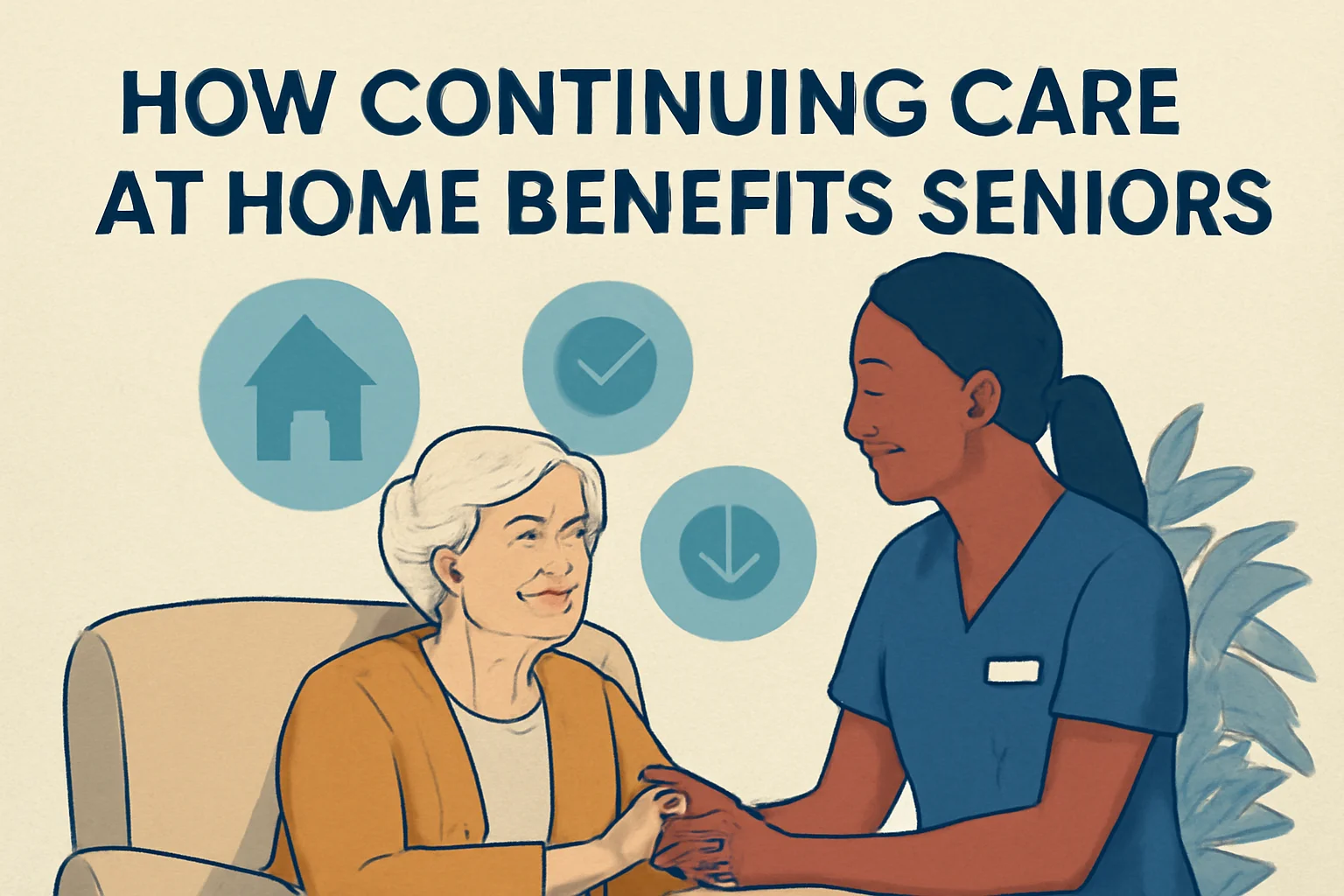
Getting older is inevitable, but having to lose your independence is not a requirement of getting older. Many forms of aging can be done in the comfort of your own home. Continuing Care at Home is a program that allows seniors to age in place. Home is where most seniors find comfort as well as familiarity, but aging also requires a level of professional assistance. Continuing Care at Home allows seniors to be as active as possible in their aging while also getting the professional healthcare support they need.
What is Continuing Care at Home?
Continuing Care at Home is a service for older adults that need support with the activities of daily living. This can also include monitoring chronic conditions and secondary conditions that may require physical rehabilitation. Instead of having to relocate to a nursing home, seniors are able to continue living in their own homes and the service providers come to the seniors.
With this variety of support, you are in a position to reside where you wish while having the support you require to stay self sufficient and well. This entails having assistance when you require it, while routines are maintained undisturbed.
The Advantages of Ongoing Care at Home
1. Comfort of Home
The biggest advantage of continuing care at home is that you are able to remain in a comforting, familiar location. Memories are made at home and most individuals feel their greatest comfort there. Emotional health is positively impacted when surrounded by things that are familiar to you. This can be your own bed, the kitchen where you have cooked for many years, or even your favorite chair.
Comfort also leads to reduced stress and anxiety. Many seniors feel that the transition to a nursing home or assisted living facility brings with it a lot of unwelcomed changes that can cause isolation or confusion. Home support also removes stress while providing the support necessary for a healthy, fulfilling life.
For enhanced peace of mind, emergency devices such as 3-Key Call Buttons can be integrated into the home. These devices provide quick access to help when needed, ensuring that you’re never alone.
2. Customized Support on Your Own Schedule
Having the option of home care means that there truly is no one-size-fits-all method of care, as is the case in so many other care facilities. Home care means that every aspect of your support, from personal care with dressing and bathing, medication management and even having a nurse come to your home for a health assessment can be obtained and tailored, specifically to your needs and your specifications.”
This model is service flexible, as, over time, your needs and care plan can and will change to ensure you continue to receive the best support possible. Whether you need someone to be there in the mornings or you need a care plan with full time assistance, that option is available to you, along with the ability to change the plan that fits the level of assistance you need for that time.”
3. Maintain Your Freedom
Many seniors struggle to ask for assistance, as one of the biggest fears is losing the ability to be in control of your own life. Home care means that you can keep living life and feel as though there is no change to your normal routine in your outsourcing of assistance. You will be in control of your day, along with your meals and take breaks without having to plan around a care facility’s timetable.
During this time you will also receive the help of a caregiver, whether it be needed help with chores, certain health issues, or for companionship. It is all about the right mix of independence intertwined with the needed assistance. With Assure Home Care Assistant from Emergency Signal can be helpful in managing your health care, you’ll have full control over your day-to-day schedule, all while receiving the support you need.
4. Most Economically Feasible
Though the price of continuing care at home differs due to customizable services, it is, for the most part. more inexpensive than that of moving into a facility. Most people only require part-time help, meaning that you aren’t paying for full care when it isn’t required.
In addition, by staying at home you may be able to save money on health care costs over time by avoiding being readmitted to the hospital or making emergency visits. With ongoing home health care, there is the opportunity to track health issues before they become emergencies, which, in the meantime, is a cost effective choice.
What Type of Care is Offered?
Services provided through continuing care at home are extensive and flexible to meet the needs of the individual. Below are just a few of the primary services that may be a part of the offerings.
Personal care: assistance with bathing, dressing and grooming.
Medical Care: reminders for medications, health monitoring and management of chronic illnesses.
Household Aid: light housekeeping, help with meal prep and grocery shopping.
Physical therapy: In-home care designed to assist in the restoration of use and improvement of mobility and strength.
Companionship: Personalized visits and emotional reinforcement to alleviate feelings of loneliness.
The amount of attention can be customized from a few hours weekly to all day support, based on the person’s needs.
Is Continuing Care at Home Right for You?
Ultimately assessing if Continuing Care at Home is the right choice is a matter of a few factors:
Do you or your loved ones seek assistance with daily tasks while wishing to remain at home?
Is there a possible scenario in which you are able to function with a partial autonomy but is in need of assistance in the oversight of health issues?
Do you prefer to remain in the comforts of home, sidestepping the inconvenience of relocating to a care setting?
If yes to any of these, then Continuing Care at Home is a unique opportunity for you. This serves to maintain your current routines and activities, while allowing you to age without compromising on care.
Getting Started
When considering continuing care at home, begin by thinking about your needs or your loved one’s needs. Ask yourself:
What type of foundational support do I need assistance with everyday routines or more advanced care catering to medical needs?
Are there particular medical or mobility challenges that need to be addressed?
What is your proposed financial resourcing for home care?
When you have some sense of the type of home care services needed, begin evaluating the internet and other resources for agencies that provide continuing care at home services. Take the time to inquire about their background and experience, the particular services provided and how adaptable their care plans are. A good number of agencies have free consultations.
Conclusion
For seniors wishing to uphold their autonomy while accessing necessary health care services, continuing care at home presents an excellent alternative. Remaining in a comforting and recognizable setting, seniors preserve their autonomy while accessing essential support for their health. If you are weighing this option for yourself or a loved one, you should evaluate your requirements and identify a reputable provider of home care services and support that offers optimal care with flexibility and offers one-on-one service to meet specific needs.